1.Overview of IPTV

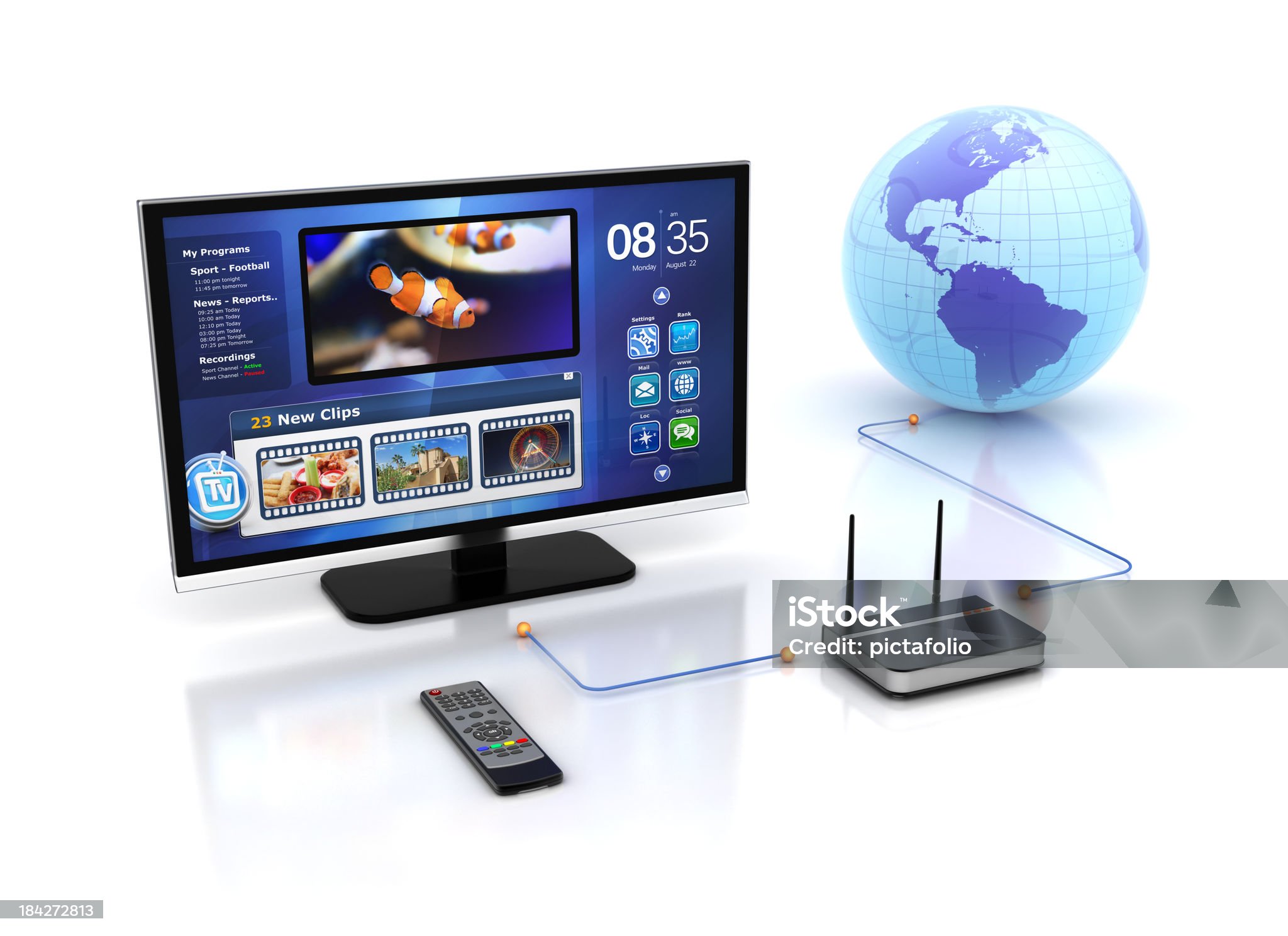
IPTV, also known as Internet Protocol Television, is becoming progressively more influential within the media industry. Compared to traditional cable and satellite TV services that use expensive and primarily proprietary broadcasting technologies, IPTV is streamed over broadband networks by using the same Internet Protocol (IP) that serves millions of home computers on the current internet infrastructure. usa iptv reseller The concept that the same shift towards on-demand services is anticipated for the multiscreen world of TV viewing has already piqued the curiosity of key players in technology integration and growth prospects.
Consumers have now embraced watching TV programs and other media content in varied environments and on a variety of devices such as mobile phones, computers, laptops, PDAs, and various other gadgets, alongside conventional televisions. IPTV is still in its infancy as a service. It is expanding rapidly, and various business models are developing that are likely to sustain its progress.
Some argue that low-budget production will likely be the first content production category to reach the small screen and capitalize on niche markets. Operating on the economic aspect of the TV broadcasting pipeline, the current state of IPTV services and infrastructure, however, has several clear advantages over its cable and satellite competitors. They include crystal-clear visuals, streaming content, custom recording capabilities, voice, web content, and responsive customer care via alternative communication channels such as mobile phones, PDAs, global communication devices, etc.
For IPTV hosting to function properly, however, the networking edge devices, the primary networking hub, and the IPTV server consisting of content converters and blade server setups have to interoperate properly. Dozens regional and national hosting facilities must be fully redundant or else the broadcast-quality signals fail, shows could disappear and fail to record, interactive features cease, the visual display vanishes, the sound becomes discontinuous, and the shows and services will fail to perform.
This text will examine the competitive environment for IPTV services in the U.K. and the United States. Through such a detailed comparison, a series of key regulatory themes across various critical topics can be revealed.
2.Legal and Policy Structures in the UK and US Media Sectors
According to legal principles and corresponding theoretical debates, the regulatory strategy adopted and the nuances of the framework depend on how the market is perceived. The regulation of media involves competition-focused regulations, media proprietary structures, consumer protection, and the safeguarding of at-risk populations.
Therefore, if we want to regulate the markets, we have to understand what defines the media market landscape. Whether it is about ownership restrictions, market competition assessments, consumer safeguards, or children’s related media, the regulator has to understand these sectors; which content markets are seeing significant growth, where we have market rivalry, integrated vertical operations, and ownership crossing media sectors, and which sectors are slow to compete and ripe for new strategies of industry stakeholders.
To summarize, the landscape of these media markets has already changed from the static to the dynamic, and only if we consider policy frameworks can we identify future trends.
The rise of IPTV on a global scale normalizes us to its dissemination. By combining traditional television offerings with novel additions such as interactive IT-based services, IPTV has the potential to be a key part of increasing the local attractiveness of remote areas. If so, will this be adequate to reshape regulatory approaches?
We have no evidence that IPTV has extra attractiveness to non-subscribers of cable or satellite services. However, certain ongoing trends have slowed down IPTV's growth – and it is these developments that have led to dampened forecasts about IPTV's future.
Meanwhile, the UK adopted a lenient regulatory approach and a forward-thinking collaboration with the industry.
3.Major Competitors and Market Dynamics

In the British market, BT is the key player in the UK IPTV market with a 1.18% market share, and YouView has a market share of 2.8%, which is the context of single and two-service bundles. BT is usually the leader in the UK according to market data, although it varies marginally over time across the range of 7 to 9%.
In the United Kingdom, Virgin Media was the pioneer in launching IPTV based on digital HFC networks, followed by BT. Netflix and Amazon Prime are the leading over-the-top platforms in the UK IPTV market. Amazon has its own streaming device service called Amazon Fire TV, similar to Roku, and has just entered the UK. However, Netflix and Amazon are not available in any telecommunications provider networks.
In the American market, AT&T is the top provider with a 17.31% stake, surpassing Verizon’s FiOS at a close 16.88%. However, considering only IPTV services over DSL, the leader is CenturyLink, trailing AT&T and Frontier, and Lumen.
Cable TV has the dominant position of the American market, with AT&T managing to attract 16.5 million subscribers, largely through its U-verse service and DirecTV service, which also functions in the Latin American market. The US market is, therefore, divided between the leading telecom providers offering IPTV services and modern digital entrants.
In Europe and North America, key providers rely on bundled services or a customer retention approach for the majority of their marketing, promoting three and four-service bundles. In the United States, AT&T, Verizon, and Lumen largely use infrastructure owned by them or traditional telephone infrastructure to deliver IPTV solutions, albeit on a smaller scale.
4.Content Offerings and Subscription Models
There are variations in the media options in the IPTV sectors of the UK and US. The types of media offered includes live broadcasts from national and regional networks, streaming content and episodes, archived broadcasts, and exclusive productions like TV shows or movies exclusive to the platform that aren’t available for purchase or broadcasted beyond the service.
The UK services feature classic channel lineups akin to the UK cable platforms. They also offer mid-size packages that contain important paid channels. Content is categorized not just by genre, but by medium: terrestrial, satellite, Freeview, and BT Vision VOD.
The primary distinctions for the IPTV market are the payment structures in the form of fixed packages versus the more adaptable à la carte model. UK IPTV subscribers can choose additional bundles as their preferences evolve, while these channels are included by default in the US, in line with a user’s initial preset contract.
Content alliances underline the distinct policy environments for media markets in the US and UK. The era of condensed content timelines and the ongoing change in the market has notable effects, the most direct being the market role of the UK’s dominant service provider.
Although a new player to the busy and contested UK TV sector, Setanta is poised to capture a broad audience through its innovative image and holding premier global broadcasting rights. The brand reputation plays an essential role, combined with a product that has a cost-effective pricing and offers die-hard UK football supporters with an attractive additional product.
5.Technological Advancements and Future Trends
5G networks, combined with millions of IoT devices, have disrupted IPTV development with the introduction of AI and machine learning. Cloud computing is greatly enhancing AI systems to implement new capabilities. Proprietary AI recommendation systems are being widely adopted by media platforms to enhance user engagement with their own advantages. The video industry has been enhanced with a new technological edge.
A higher bitrate, via better resolution or improved frame rates, has been a key goal in boosting audience satisfaction and gaining new users. The advancements in recent years were driven by new standards crafted by industry stakeholders.
Several proprietary software stacks with a smaller footprint are close to deployment. Rather than focusing on feature additions, such software stacks would allow media providers to prioritize system efficiency to further refine viewer interactions. This paradigm, like the previous ones, depended on consumer attitudes and their desire to see value for their money.
In the near future, as rapid tech uptake creates a uniform market landscape in viewer satisfaction and industry growth reaches equilibrium, we foresee a focus shift towards service-driven technology to keep older audiences interested.
We emphasize two key points below for both IPTV markets.
1. All the major stakeholders may contribute to the next phase in media engagement by making static content dynamic and engaging.
2. We see VR and AR as the key drivers behind the growth trajectories for these fields.
The constantly changing audience mindset puts information at the forefront for every stakeholder. Legal boundaries would limit straightforward access to consumers' personal data; hence, privacy regulations would likely resist new technologies that may compromise user safety. However, the existing VOD ecosystem suggests otherwise.
The cybersecurity index is at its weakest point. Technological progress have made system hacking more virtual than physical intervention, thereby advantaging cybercriminals at a higher level than black-collar culprits.
With the advent of headend services, demand for IPTV has been on the rise. Depending on user demands, these developments in technology are set to revolutionize IPTV.
References:Bae, H. W. and Kim, D. H. "A Study of Factors affecting subscription to IPTV Service." JBE (2023). kibme.org
Baea, H. W. and Kima, D. H. "A Study about Moderating Effect of Age on The IPTV Service Subscription Intention." JBE (2024). kibme.org
Cho, T., Cho, T., and Zhang, H. "The Relationship between the Service Quality of IPTV Home Training and Consumers' Exercise Satisfaction and Continuous Use during the COVID-19 Pandemic." Businesses (2023). mdpi.com